Imura Art Gallery is pleased to present “Time Machine,” a solo exhibition of works
by Satoru Aoyama.
Aoyama moved to the UK during his high school years and subsequently studied textile art at Goldsmiths College in London. The program was grounded in gender studies and had a sewing room, where Aoyama began creating works on an industrial sewing machine.
In 2012, he met Masaharu Sato and Keisuke Shirota at a group exhibition in the Serbian capital of Belgrade, a city that still bore the scars of civil strife. Titled “Photo-Reference: Photographic Image in Contemporary Japanese Art Practices,” the exhibition was put together by Serbian curator Jelena Stojković and featured works by Japanese artists who all used photography as a medium but used their own diverse approaches.
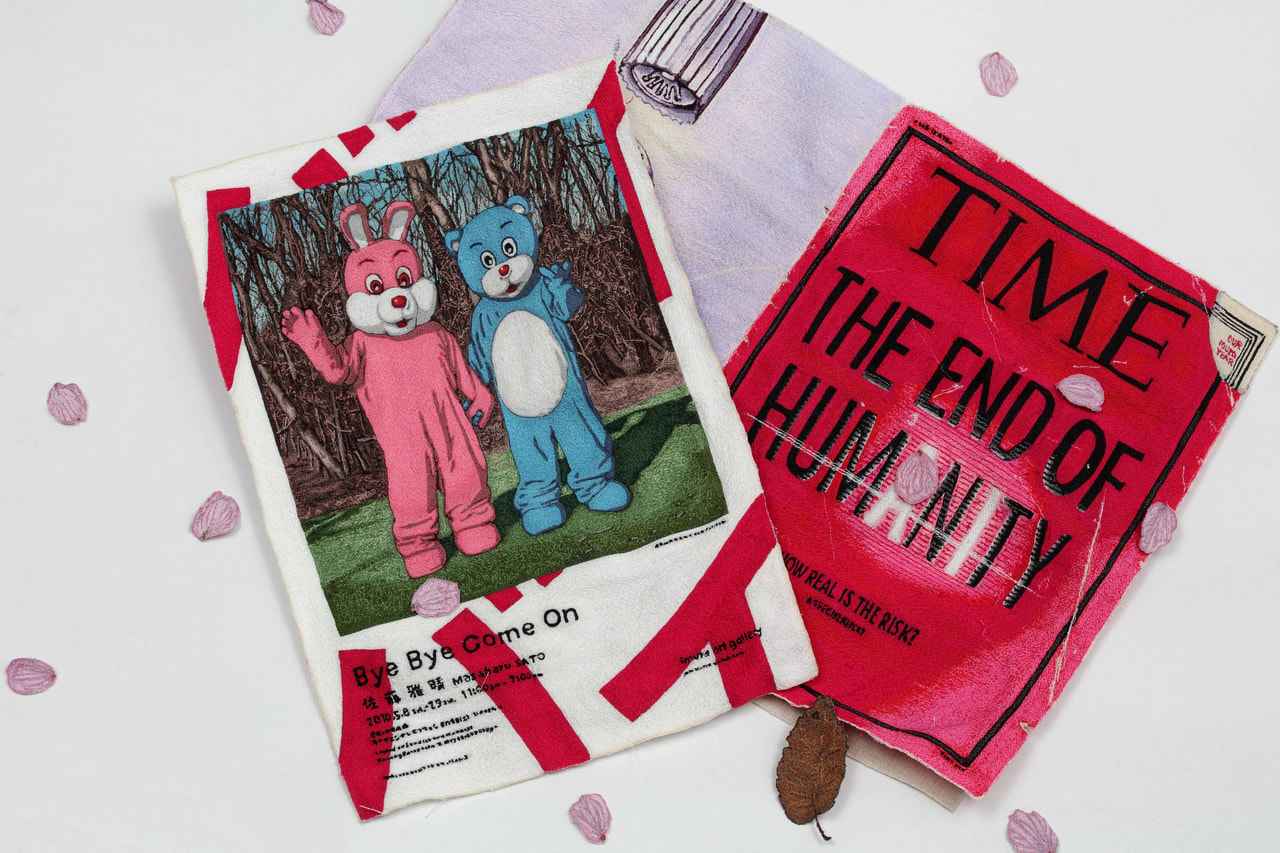
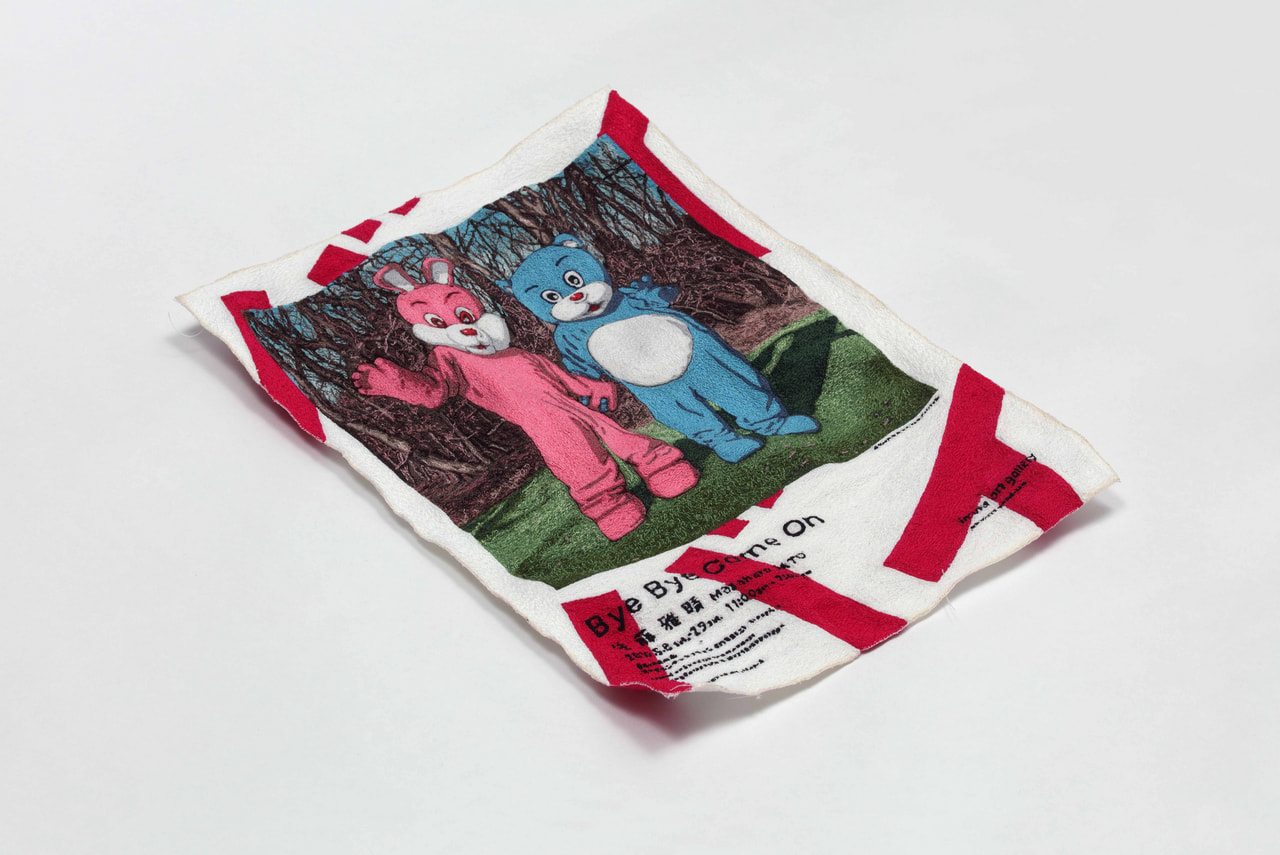
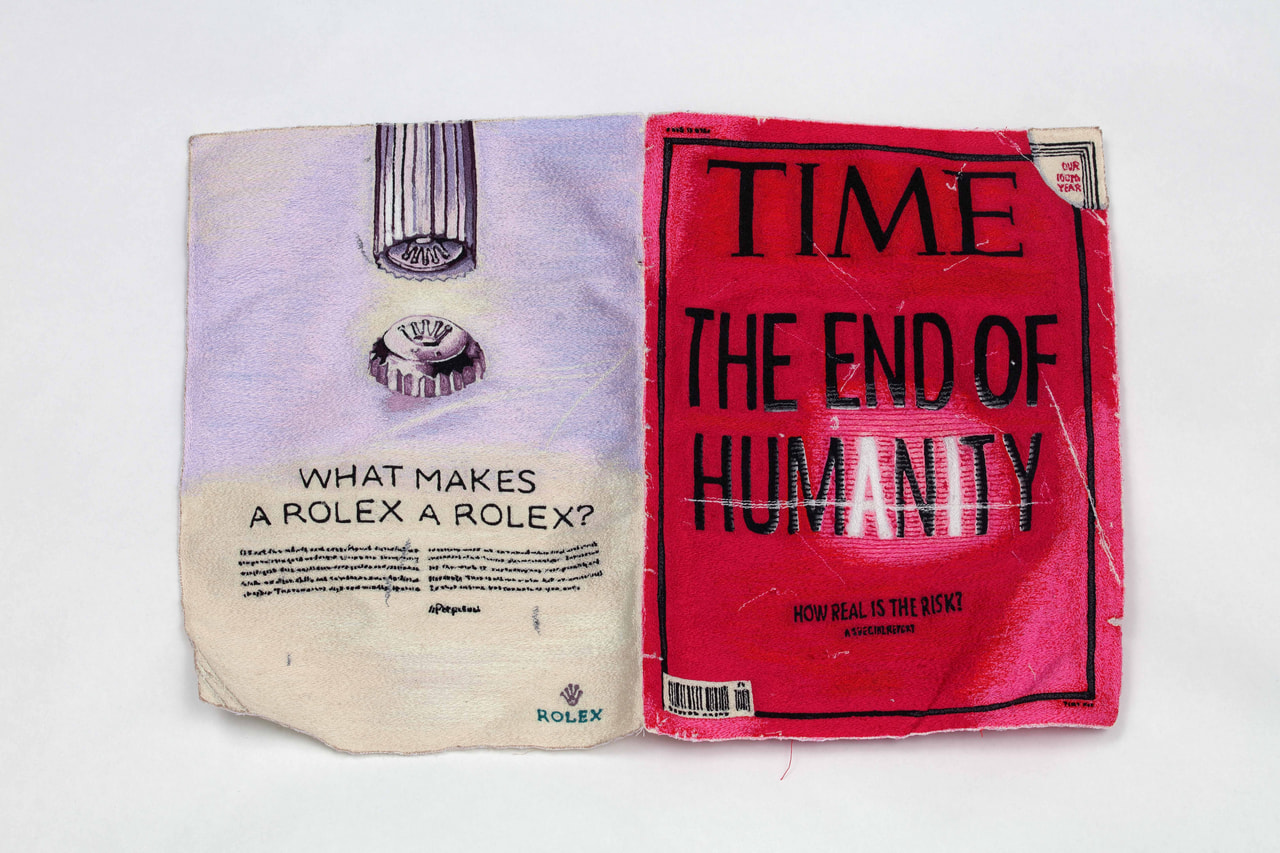
“Time Machine” presents creations such as Aoyama’s machine-embroidered tracing of the flyer for “Bye Bye Come On”—a solo exhibition held by Sato at this gallery in 2010—and an embroidered representation of a picture postcard sent by Stojković. Sato’s work titled Bye Bye Come On was also displayed at the 2012 exhibition in Serbia, providing Aoyama with his first taste of the artistry of Sato, who later passed away in 2019. Aoyama notes, “People hundreds of years from now will see little difference between this solo exhibition and Sato’s, but that doesn’t change the fact that both were held in the same era by two artists born in the same era.”
Aoyama’s creative focuses in recent years include exploration of the things that are vanishing from our rapidly changing world. Flyers and other paper media are being replaced with digital versions, while paper money and tickets are being sidelined by cashless payment. These and other vanishing things may truly be gone hundreds of years from now. Conversely, there are things that will remain or that should be preserved. “Time Machine” takes a close look at the irreversible flow of time and displays a resistance to that force, while touching on the transformation of things like human nature and the value of labor. It is an art installation that imagines a gallery room setting centuries from now. Be sure to join us and partake of Aoyama’s latest works as you take a time trip to examine our “now” in the distant future.
Aoyama considers this exhibition to be the final gallery room for “A Boy Who Sews Forever in Kyoto,” his simultaneous solo showing at Museum「Eki」KYOTO. We invite you to also visit that presentation.
この度、イムラアートギャラリーでは青山悟の個展「時間ミシン|Time Machine」を開催いたします。
青山は、高校時代に渡英し、ロンドンのゴールドスミスカレッジでテキスタイルアートを学びました。ジェンダースタディーを基礎とするこの学科にはミシン室があり、青山はそこで工業用ミシンによる制作を始めます。
2012年、セルビアのベオグラードで開催されたグループ展「Photo-Reference: Photographic Image in Contemporary Japanese Art Practices」にて、青山は佐藤雅晴、城田圭介と出会いました。写真というメディアを使いながら、異なるアプローチで制作をする日本人作家を集めたこの展覧会は、セルビア人のキュレーターJelena Stojkovićによる企画展であり、まだ内戦の爪痕の残る街で開催されました。
本展の出品作品には、佐藤が2010年にイムラアートギャラリーで開催した個展「バイバイカモン」のフライヤーを青山がミシン刺繍でトレースした作品、Jelena Stojkovićからの絵葉書の刺繍作品も含まれます。《バイバイカモン》は2012年のセルビアの展覧会でも出展され、それが青山にとって初めて観た佐藤作品でもあります。佐藤は2019年にこの世を去りましたが、青山は「今回の個展も佐藤君の個展も、数百年後の人からしたら誤差の範囲のできごとであり、同時代に開催された展覧会で、同じ時代に生きたということに変わりはない」と言います。
近年、青山は、この変化の激しい社会の中で「消えゆくものたち」を制作のテーマとしてきました。フライヤーをはじめとする紙媒体は、デジタルになりつつあり、紙幣や切符は、キャッシュレス決済にとって変わられています。これらの「消えゆくものたち」は、数百年後には本当に消えてなくなっているのかもしれません。逆に残るもの、残していくべきものもあるでしょう。「時間ミシン|Time Machine」と名付けられた本展は時間の不可逆性に向き合い、またそれに抗う姿勢を見せながら、労働の価値や人間性の変容について言及します。展示は数百年後の、とある展示室を想定したインスタレーションとなります。是非、遠い未来から見た「今」を想像しながら青山の最新作を楽しんでいただければと思います。
青山は本展を、同時開催となる美術館「えき」KYOTOでの個展「刺繍少年フォーエバー in Kyoto」の最終展示室と位置付けています。こちらもあわせてご高覧くださいませ。